
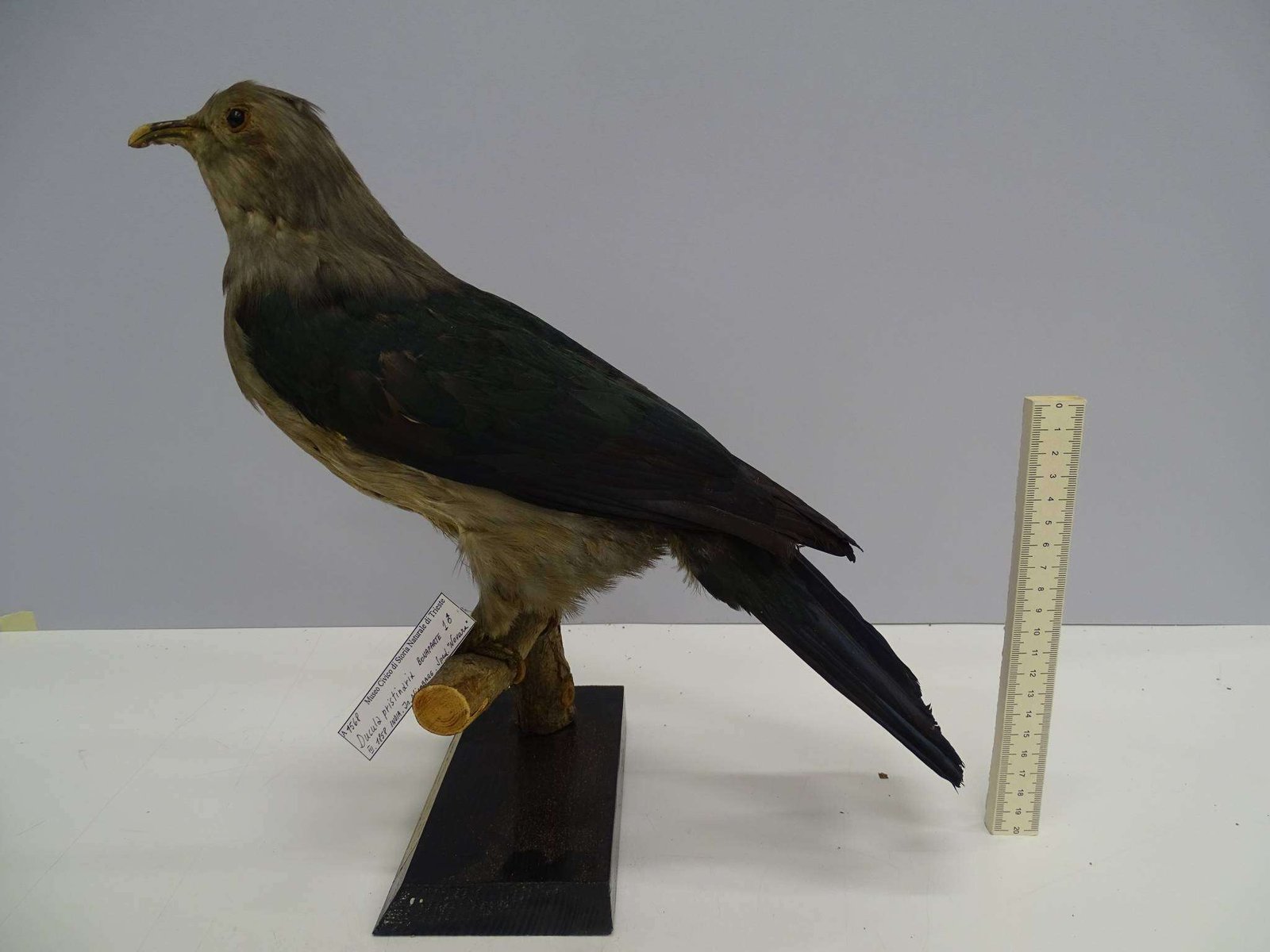
Ducula pistrinaria pistrinaria Bonaparte, CLJL 1855
From the Reise der Fregatte Novara [...] Zoologischer Theil, A. Pelzeln, "Vögel": "A male was shot on 7 March in the neighbourhood of Itoe village, near the anchorage in Nangkauri harbour, by Baron Wüllerstorf, a second in Nangkauri by Mr Zelebor. Iris blood-red, beak light yellow-grey, dark lead-grey at extremity, feet red-purple, grey-yellow at base. Total length 16" 9"', flight distance 2' 4 1/2". These pigeons are not uncommon and are widespread throughout the Nicobar Islands. In February they were still present in large flocks in the forests, where there are many fruit trees of the genera Prunus and Myristica. Later, in March, they were more scattered in pairs and often emitted their deep and extended u-uh-ruh-uh call. Only plant fruits were found in their stomachs. The Nicobar people call this pigeon Tamuh; some say Mumu. Zlbr. [Zelebor]" (p. 105).


© 2026 Global Sea Routes - All Rights Reserved